Sunday, March 11, 2012

Critical Listening 7


Moonglow - Benny Goodman


"Moonglow" was first recorded by Joe Venuti and his Orchestra in 1933, with later recordings by Ethel Waters and Benny Goodman and his Orchestra in 1934, and has since become a jazz standard, performed and recorded numerous times by a wide array of musical talents.


Moonglow begins with the Orchestra playing the A section of the song and Benny soloing on his Clarinet. At times he plays along with orchestra when he is not soloing. The solos in the song consist of Benny on his Clarinet and Teddy Wilson on Piano. You can here the piano very well throughout the song which keeps the overall tempo going. The song is 32 bars with an AABA format. I tried to do some more research on the song to understand it better and although I have a hard time understanding the musical terms I ran into this paragraph, "The melodic riff of the A section is composed of a repeated minor third interval followed by a major third interval and then a repeated note. Harmonic movement is largely in an ascending circle of fourths, or with descending chromatic substitutions, but there is also movement between thirds or between major and minor seventh chords. Minor seventh chords are often played in first inversion in this tune, and may therefore be thought of and notated as 6 chords of the relative major."(Jazzstandard.com) The more I listened to the song the more I could begin to try and understand that paragraph above. I can make out the minor third interval well, but have a hard time understanding the rest. 


References: "Moonglow". jazzstandards.com.

History of the Electric Guitar

Various experiments at electrically amplifying the vibrations of a string instrument date back to the early part of the twentieth century. Patents from the 1910s show telephone transmitters adapted and placed inside violins and banjos to amplify the sound. Hobbyists in the 1920s used carbon button microphones attached to the bridge, however these detected vibration from the bridge on top of the instrument, resulting in a weak signal. With numerous people experimenting with electrical instruments in the 1920s and early 1930s, there are many claimants to have been the first to invent an electric guitar.

Electric guitars were originally designed by guitar makers and instrument manufacturers. Guitar innovator Les Paul experimented with microphones attached to guitars. Some of the earliest electric guitars adapted hollow bodied acoustic instruments and used tungsten pickups. The first electrically amplified guitar was designed in 1931 by George Beauchamp, General Manager at National Guitar Corporation with Paul Barth who was Vice President. The maple body prototype for the one piece cast aluminum "Frying Pan" was built by Harry Watson, factory superintendent of National Guitar Corporation. Commercial production began in late summer of 1932 by the Ro-Pat-In Corporation (Electro-Patent-Instrument Company Los Angeles), a partnership of Beauchamp, Adolph Rickenbacker, and Paul Barth. By 1934 the company was renamed Rickenbacker Electro Stringed Instrument Company.
The need for the amplified guitar became apparent during the big band era as orchestras increased in size, particularly when guitars had to compete with large brass sections. The first electric guitars used in jazz were hollow archtop acoustic guitar bodies with electromagnetic transducers. By 1932 an electrically amplified guitar was commercially available. Early electric guitar manufacturers include: Rickenbacker (first called Ro-Pat-In) in 1932, Dobro in 1933, National, AudioVox and Volu-tone in 1934,Vega, Epiphone (Electrophone and Electar), and Gibson in 1935 and many others by 1936.


References : 
  • Broadbent, Peter (1997). Charlie Christian: Solo Flight – The Seminal Electric Guitarist. Ashley Mark Publishing Company. ISBN 1-872639-56-9.
  • Evans, Tom (1977). Guitars: Music, history, construction and players from the Renaissance to Rock. Paddington Press. ISBN 044822240X.
  • Govenar, Alan B.; Jay F. Brakefield (1998). Deep Ellum and Central Track: Where the Black and White Worlds of Dallas Converged. University of North Texas Press. ISBN 1-57441-051-2.
  • Millard, AndrĂ©, (ed.) (2004). The Electric Guitar: A History of an American Icon. The Johns Hopkins University Press. ISBN 0-8018-7862-4.
  • Wheeler, Tom (1978). The Guitar Book: A Handbook for Electric & Acoustic Guitarists. Harpercollins. ISBN 006014579X.
  • Wheelwright, Lynn; Carter, Walter (28 April 2010). "Ro-Pat-In Electric Spanish". Vintage Guitar. Retrieved 8 August 2010.

Sunday, March 4, 2012

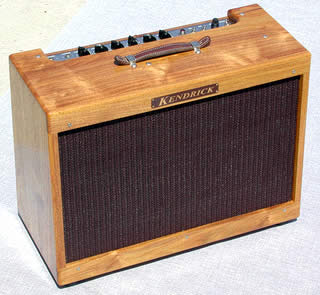
Cool Jazz Amps


Joe Pass 1929-1994


Joe began playing the guitar when he was nine years old and by age fourteen he was playing in local bands in Johnstown Pennsylvania. In 1947, at eighteen, he went on the road with the Tony Pastor band before returning to high school. He appears on several Pastor recordings from this period as a rhythm player. He left school again shortly after returning and began playing around New York. During this time in New York he started using drugs and he began a decline that ultimately ended with time in several rehabilitation centers and jail. During this time Pass continued to play and he appeared on a handful of commercial recordings. After being busted several times and spending more than 10 years trying to kick drugs, Pass entered the Synanon Center in California. After 15 months in Synanon Joe Pass made his famous Sounds of Synanon (1961) recording with Arnold Ross, another Synanon resident. Following this recording Pass worked in the Los Angeles studios for more than 10 years before he signed with the Norman Granz’s Pablo label. It was with this label that Pass made many of his most essential recordings, including his famous Virtuoso series. In the Virtuoso series of solo guitar recordings Joe Pass redefined solo guitar playing. His complete mastery of finger style playing brought a new depth and complexity to solo guitar. These solo recordings and his solo concerts made him famous. He was consistently listed in the jazz polls year after year mostly based on the success of his solo work. During this same period at Pablo he recorded a set of records with Ella Fitzgerald on which he provided accompaniment with his solo guitar. These recordings remain some of the very best examples of vocal accompaniment with the solo guitar. It was with the solo guitar that Joe Pass had his greatest influence, but he was also one of the best small group ensemble players of his time. Throughout the 1970’s, 1980’s and 1990’s Joe Pass recorded several important jazz recordings with some of the best jazzmen of the time. He formed a special relationship with John Pisano and together they made a number of recordings that were showcases for Joe Pass’ amazing skill as a soloist and Pisano’s amazing abilities as a rhythm player. Joe Pass rose to prominence as a jazz guitarist on the strength of his solo playing, but his total career shows a complete musician able to perform in any venue. In 1947 – 1950 when Joe Pass was in New York, players like Billy Bauer, Bill DeArango and Johnny Smith were the top players in the studios and on the local jazz scene. While they were making jazz guitar history Joe Pass was consumed by drugs and dropped out of sight for 12 years. But, with his enormous talent, Joe Pass still found his rightful place as one of the greatest jazz guitarists of the 20th century.
©Copyright 2005 Classic Jazz Guitar

Critical Listening 6


Maple Leaf Rag - Scott Joplin

This piece is an older Rag Time tune from the late 1800's. The song is in ABACD format. I would place the BPM of this song around 98-100. This is almost a type of showman ship to prove how good he was at his profession. I'm sure Jelly Roll Morton and other famous Pianist used songs and structures like this one to reach new levels of playing. Tweaking and reconstructing ragtime into the solos certain pianist played in later jazz music is obvious to me now. It's cool to see how ragtime evolved into improvisational jazz yet still kept many of its roots.